

The Virtuous vs. Vicious Cycle of Rental Property Maintenance
As we are entering the start of the busy real-estate spring season, we see investors sitting at the closing table to purchase their first, second, or fifth rental property and the mood is usually excited and optimistic about their new investment. They have detailed plans to optimize the investment through thoughtful rent adjustments, proactive repairs, improved management and just genuinely excited to take care of the property. Rarely does anyone buy a property with the intention of letting it decline.
Unfortunately, time has a way of reshaping priorities. Life gets busy, new opportunities arise, properties can become out of sight and out of mind. And that original list of improvements slowly slips to the bottom of the todo list. What begins as a temporary delay often turns into deferred maintenance, and that is where the long term trajectory of a rental property is truly decided.
At its core, maintenance is not just an expense, it is the act of preserving value for your asset. You don’t get to keep up with the benefits if you don’t keep up maintaining your property. Whether it is addressed proactively or ignored, the cost will be paid eventually for maintenance. The only question is how and when. Investors typically pay for deferred maintenance in one of two ways, at the point of sale, through a lower property value and tougher negotiations or gradually through routine and preventative upkeep, while benefiting from higher rents and stronger tenant performance throughout ownership. Stepping back you can look at Rental Property Maintenance taking two very different types of paths the vicious cycle and the virtuous cycle.
The Vicious Cycle of Rental Property Maintenance
The vicious cycle often begins quietly, with small decisions to delay routine upkeep or ignore preventative repairs. Over time, those decisions compound. This cycle feeds itself: reduced income leads to less reinvestment, which further accelerates decline for the property.
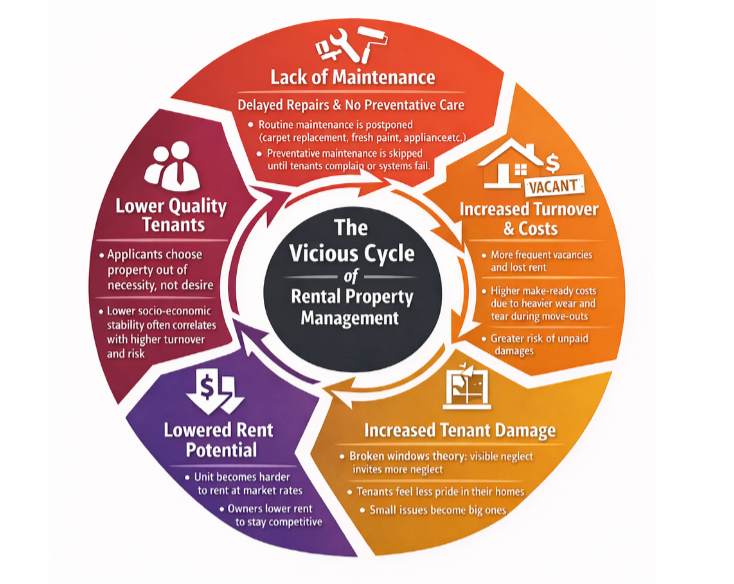
- Lack of Maintenance
- Routine maintenance is postponed (carpet replacement, fresh paint, appliance updates,
etc.). - Preventative maintenance is skipped until tenants complain or systems fail.
- Routine maintenance is postponed (carpet replacement, fresh paint, appliance updates,
- Increased Turnover and Costs
- More frequent vacancies and lost rent.
- Higher makeready costs due to heavier wear and tear during moveouts.
- Greater risk of unpaid damages.
- Increased Tenant Damage
This is where the “broken windows” theory comes into play: visible disorder signals that care is
not expected, which invites more neglect and damage.- Tenants feel less pride in the home.
- Small issues become big ones.
- Lowered Rent Potential
- The unit becomes harder to rent at market rates.
- Owners lower rent to stay competitive.
- Lower Quality Tenant Pool
- Applicants choose the property out of necessity, not preference.
- Lower socioeconomic stability often correlates with higher turnover and risk.
This cycle feeds itself: reduced income leads to less reinvestment, which further accelerates
decline for the property.
The Virtuous Cycle of Rental Property Management
The virtuous cycle is built intentionally. It requires planning, consistency, and viewing
maintenance as an investment rather than a burden.

- Regular Maintenance
- Routine updates (carpet, paint, appliances, fixtures).
- Preventative maintenance performed before tenants request it.
- Reduced Turnover and Costs
- Fewer vacancies and more consistent rent collection.
- Less movein/moveout damage.
- Lower longterm repair expenses.
- Decreased Tenant Damage
- Tenants treat the property like a home, not a temporary shelter.
- Pride of occupancy increases.
- Issues are reported early instead of ignored.
- Increased Rent Potential
- Small annual increases are more easily accepted by satisfied tenants.
- Market rent adjustments are achievable.
- Higher Quality Tenant Pool
- Tenants choose the property because they want to live there — not because they have no
alternatives. - Greater financial stability and longer average tenancy.
This cycle also feeds itself: stronger income allows for reinvestment, which further improves
performance and asset value.
- Tenants choose the property because they want to live there — not because they have no
The Bigger Picture for Investors
In the end, successful rental property management and ownership is less about reacting to problems and more about designing the future of the asset. Owners and managers who think longterm, invest consistently, and view their properties as evolving systems tend to find themselves firmly in the virtuous cycle, where both the property and the investment thrive.